Portfolio Owner's Manual · Chapter III
⬡ Core Growth

TheEngineRoom

The high-conviction growth positions that do the heavy lifting. These are large, proven businesses growing at rates that defy their size — riding structural megatrends in AI, healthcare, and global digital infrastructure that have years of runway left.

What makes a Core Growth holding?
A large or mega-cap business with a durable competitive moat, growing revenues and earnings at 20%+ annually, and exposure to a structural multi-year tailwind. Held at meaningful position sizes — typically 3–8% NAV. Time horizon: 5–10+ years.
12 Holdings · Growth Tier · 2026
Sectors covered
5
AI / Semis / Healthcare / Defence / Pharma
Geographies
6
US · Taiwan · UK · Denmark · Canada · Global
Typical NAV weight
3–8%
Per position at target sizing
Hold horizon
5–10yr
Through cycles — thesis-driven sells only
01

AI & Semiconductor Infrastructure

GPUs · Networking · Custom silicon · Foundry · EDA

The AI infrastructure buildout is the largest capital investment cycle in the history of technology. These five companies are the picks-and-shovels of that buildout — the hardware, networking, and silicon design tools without which modern AI cannot function. Each occupies a near-monopoly or duopoly position in its specific layer of the stack.

NVDA
NVIDIA Corporation
🇺🇸
Santa Clara, California · NASDAQ
AI Accelerators
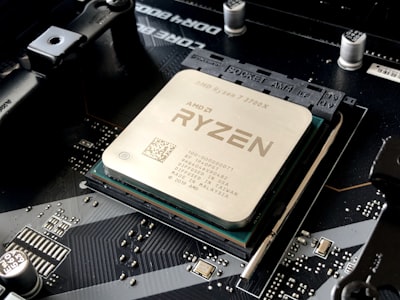
GPU chips
The indispensable infrastructure of the AI revolution — GPU hardware plus CUDA software ecosystem create a moat that has taken 20 years to build
NVIDIA designs the GPUs that power artificial intelligence — both the training of large language models and the inference that runs them in production. The H100 and B100/B200 Blackwell chips are the gold standard for AI compute, and the demand from hyperscalers (Microsoft, Google, Amazon, Meta) and sovereign AI programmes vastly exceeds supply. But the hardware story understates the moat. CUDA — NVIDIA's proprietary software ecosystem — is the reason developers can't simply switch to AMD or Intel when chips become available. CUDA has been taught in universities for 15 years, is embedded in every major AI framework, and represents billions of developer hours of optimisation. The GPU is the product; CUDA is the lock.
Watch These
Data Centre RevenueQuarterly growth — the primary business
Blackwell RampNext-gen GPU supply vs demand
Gross Margin %Target 70%+; compression signals competition
CUDA is a parallel computing platform launched in 2006. Every AI researcher who learned to train neural networks did so using CUDA. Every major AI framework (PyTorch, TensorFlow, JAX) is optimised for CUDA. Switching the entire world's AI stack away from CUDA would require years of software re-engineering, re-training millions of developers, and re-optimising every production system. This is why AMD's theoretically competitive MI300X GPU has struggled to take meaningful market share despite lower pricing. Hardware can be copied; an ecosystem cannot.
Conviction: Maximum — largest position
AMD
Advanced Micro Devices
🇺🇸
Santa Clara, California · NASDAQ
CPUs & AI Accelerators
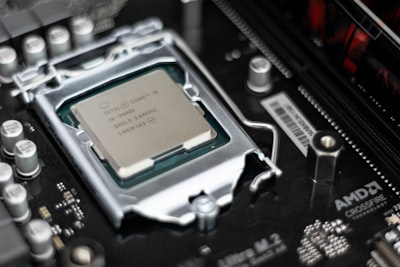
Semiconductor processor
The credible #2 in AI accelerators and dominant #2 in server CPUs — a dual growth engine with transformative OpenAI partnership potential
AMD has executed one of the most remarkable turnarounds in semiconductor history. Under Lisa Su, it went from near-bankruptcy in 2014 to dominating Intel in server CPUs with EPYC, and building a credible AI GPU business with the MI300X and MI350 series. The EPYC business is already a major profit engine — server CPUs are AMD's most valuable near-term compounder, with continued share gains from Intel's manufacturing stumbles. The AI GPU story is earlier but potentially transformational: the OpenAI partnership signals that hyperscalers are willing to invest in a second source for AI compute — reducing dependency on NVIDIA and giving AMD a real opportunity in the multi-hundred-billion-dollar AI accelerator market.
Watch These
MI Series GPU RevenueAI accelerator traction — the upside driver
EPYC Server ShareCPU gains on Intel — the compounding engine
Data Centre Growth %Quarterly — the combined thesis metric
AMD carries a C1 Monitor flag in the Thesis Tracker — the on-track revenue growth threshold was calibrated to peak AI cycle velocity (≥50% YoY data centre growth) and is under deliberate review. This is not a thesis-broken signal — it reflects a calibration question about whether peak-cycle thresholds are appropriate benchmarks. AMD's competitive position in both CPUs and GPUs remains intact. The MI series is the one to watch for thesis validation in AI.
Conviction: High
AVGO
Broadcom Inc.
🇺🇸
Palo Alto, California · NASDAQ
Custom AI Silicon & Software
Custom silicon
The backbone of AI infrastructure — dominant in custom AI accelerators for hyperscalers and Ethernet networking, plus VMware's recurring software revenues
Broadcom is the infrastructure backbone of the AI revolution in two distinct ways. First, custom silicon: it designs bespoke AI accelerator chips (XPUs) for Google (TPUs), Meta, and other hyperscalers who want to avoid total dependence on NVIDIA. Each custom chip programme is a multi-billion-dollar long-term engagement with switching costs that are essentially infinite — Broadcom becomes structurally embedded in its customers' AI architectures. Second, Ethernet networking: Broadcom dominates the networking chips that connect the thousands of GPUs inside an AI data centre — as GPU clusters scale, network chip demand scales with them. The VMware acquisition adds $8bn+ of high-margin recurring software revenue that cushions semiconductor cyclicality and funds continued R&D investment.
Watch These
AI Revenue (XPU + Network)Custom silicon + networking combined
VMware ARRSubscription conversion progress
Gross Margin %70%+ target — mix shift signal
Custom AI chips designed by Broadcom for specific hyperscalers are tailor-made to that customer's exact architecture — they outperform general-purpose NVIDIA GPUs on specific tasks while being cheaper to run at scale. This creates a different relationship than buying off-the-shelf hardware: the hyperscaler co-invests in design, receives a proprietary chip, and has years of switching cost baked in. Broadcom is the only company that can execute these programmes at hyperscaler scale and quality.
Conviction: Maximum
ANET
Arista Networks
🇺🇸
Santa Clara, California · NYSE
Cloud Networking
Network infrastructure
The dominant supplier of high-performance cloud networking switches — now riding a second wave of AI-driven network upgrade spending
Arista Networks builds the switching and routing infrastructure that connects cloud data centres — the plumbing inside hyperscaler facilities. After winning the first wave of cloud networking from Cisco in the 2010s, Arista is now the primary beneficiary of a second wave: AI cluster networking. Training a large AI model requires thousands of GPUs to communicate simultaneously at extremely low latency. This demands specialised, ultra-high-speed networking — Arista's 400G and 800G switches. Major hyperscalers (Microsoft, Meta, Google) have multi-year purchase commitments for Arista's AI networking products. The EOS software platform — a single network operating system running across all Arista hardware — creates meaningful switching costs and a growing software revenue stream on top of the hardware business.
Watch These
AI Networking Revenue400G/800G product line growth
Hyperscaler SpendMicrosoft / Meta / Google commitments
EOS Software RevenueGrowing recurring layer on hardware base
Cisco dominated enterprise networking for decades but was slow to pivot to cloud architecture. Arista was purpose-built for cloud from day one — its EOS software runs identically across all hardware, simplifying management at hyperscaler scale. Arista's gross margins (~65%) vs Cisco's (~65%) look similar, but Arista grows at 3× the rate and is taking share. In AI networking specifically, Arista's ultra-low-latency and high-bandwidth architecture is technically superior for GPU cluster interconnect — the reason hyperscalers are committing multi-year spend.
Conviction: Maximum
TSM
TSMC
🇹🇼
Hsinchu, Taiwan · NYSE (ADR)
Semiconductor Foundry
Semiconductor fabrication
The world's most advanced semiconductor foundry — the single factory that manufactures chips for NVIDIA, Apple, AMD, and virtually every leading fabless designer
TSMC is where chips are actually made. NVIDIA designs its GPUs; TSMC fabricates them. Apple designs its M-series chips; TSMC fabricates them. AMD, Qualcomm, Broadcom, MediaTek — the same story. TSMC is the world's largest and most advanced contract chipmaker, commanding approximately 90% of the market for the most advanced process nodes (3nm, 2nm). No other company on earth can manufacture leading-edge semiconductors at TSMC's yield, volume, or quality. This is not a commodity manufacturing business — it is a monopoly of technical capability accumulated over 35 years and hundreds of billions of dollars of R&D. Every AI chip that matters runs on TSMC silicon.
Watch These
Advanced Node Revenue3nm/2nm as % of total — pricing power
AI Revenue GrowthHPC / AI chip demand — primary growth engine
Geopolitical NewsTaiwan risk — the primary overhang
TSMC's principal risk is geopolitical — almost all its advanced fabs are in Taiwan, which faces ongoing tension with China. A conflict scenario would be catastrophic for global technology. This risk is real and unhedgeable. The mitigation: TSMC is building fabs in Arizona (US) and Japan (JASM), diversifying manufacturing geography. The world's dependence on TSMC also creates enormous geopolitical incentive for major powers to protect Taiwan's stability. This is held with full awareness of the risk — sized within guardrails.
Conviction: High — geo risk acknowledged
"The AI infrastructure buildout is the largest capex cycle in the history of technology."
Hyperscalers have committed to spending $300bn+ on AI infrastructure in 2025 alone. This is not a bubble — it is the infrastructure layer of a general-purpose technology that will restructure every industry. The five companies above are the unavoidable picks-and-shovels. Every dollar of AI capex flows through one or more of them.
02

Platforms & Software

Search & cloud · E-commerce & AWS · Enterprise workflow automation

GOOG
Alphabet Inc.
🇺🇸
Mountain View, California · NASDAQ
Search / Cloud / AI
Google campus
The search monopoly evolving into an AI-first company — advertising cash engine plus fast-growing profitable cloud, all at a reasonable valuation
Alphabet is three businesses in one. Google Search: the world's dominant information retrieval system, generating ~$200bn+ in advertising revenue annually with structural advantages in data, distribution, and AI-powered relevance that are not easily disrupted. YouTube: the dominant video platform globally with growing subscription and advertising revenue. Google Cloud: now the world's third-largest cloud provider and growing at 28%+ with expanding profitability — catching up to AWS and Azure from a lower base. The AI angle is existential: Gemini is Alphabet's response to ChatGPT, and the AI Overview feature in Search monetises AI at scale through existing advertising infrastructure. The bear case on AI disrupting search has so far failed to materialise at the revenue level.
Watch These
Search Revenue GrowthAI Overview impact on monetisation
Google Cloud GrowthTarget 28%+ — closing gap on AWS/Azure
Operating MarginEfficiency gains — buyback fuel
The existential question for Alphabet: does AI-powered search (ChatGPT, Perplexity, Claude) erode Google's search monopoly? So far, the data says no — search query volume and revenue have continued growing. Google has the distribution advantage (default on Android, Chrome, Safari historically) and is integrating Gemini deeply into Search. The risk is real but the bear case has repeatedly failed to materialise on the timelines predicted. Cloud and YouTube provide meaningful diversification even if Search were to see some share erosion.
Conviction: Maximum
AMZN
Amazon.com Inc.
🇺🇸
Seattle, Washington · NASDAQ
E-Commerce / Cloud / Ads
Amazon fulfilment
Three world-class businesses in one — e-commerce logistics, the world's largest cloud (AWS), and a fast-growing advertising platform all compounding simultaneously
Amazon is a case study in reinventing revenue. AWS, which started as an internal tool, is now the world's largest cloud provider with $100bn+ annual revenue growing at 17%+ and expanding margins — it funds the entire enterprise. Advertising, almost invisible to consumers but worth $50bn+ annually, has become the third pillar — Amazon's unique position inside the purchase funnel makes its ad inventory uniquely valuable to brands. The e-commerce business is now optimising efficiency after years of heavy investment, releasing a wave of free cash flow. The AI angle is multi-layered: AWS sells AI compute (including NVIDIA GPUs and Amazon's own Trainium/Inferentia chips), offers Bedrock for AI model access, and is integrating AI into Alexa and the fulfilment network.
Watch These
AWS Revenue GrowthPrimary profit engine — acceleration signal
Advertising RevenueThird pillar — high-margin, under-appreciated
Operating MarginOverall efficiency — the FCF story
AWS has a switching cost moat that rivals any in technology. Once a company builds its infrastructure on AWS — databases, compute, storage, AI services — migrating to Azure or GCP is a multi-year, multi-hundred-million-dollar project with enormous execution risk. The installed base is sticky; the growth comes from existing customers spending more (AI, data, ML) and new enterprises migrating workloads from on-premise. AWS's lead in cloud is structural, not cyclical.
Conviction: Maximum
NOW
ServiceNow Inc.
🇺🇸
Santa Clara, California · NYSE
Enterprise Software
Enterprise workflow
The operating system of the enterprise — a workflow automation platform deeply embedded in the largest organisations on earth, growing at 20%+ with exceptional FCF margins
ServiceNow started as an IT service management platform — the system that handles internal IT tickets, change management, and incident response. It has since expanded to become the central workflow automation layer across HR, finance, legal, and customer service for the world's largest enterprises. Every Fortune 500 company is either a ServiceNow customer or a prospect. The platform's genius: once implemented, it becomes the connective tissue of an organisation's operations — integrating with hundreds of other software systems, becoming the single pane of glass for all enterprise workflow. AI is now accelerating the thesis: ServiceNow's Now Assist AI features are embedded directly in workflows, generating expansion revenue from existing customers without new sales cycles.
Watch These
cRPO GrowthCurrent remaining performance obligations — forward revenue
ACV per CustomerExpansion within existing accounts — land & expand
FCF MarginTarget 30%+; best-in-class software economics
ServiceNow's AI products (Now Assist) are priced as add-on SKUs on top of existing workflow licences. This means every existing customer is an AI upsell opportunity — no new sales motion required, just expansion within the current relationship. The AI features automate resolution of IT tickets, generate HR policy summaries, and draft legal contracts — tangible time savings that are easy to cost-justify. This is an ideal structure for AI monetisation: high willingness to pay, low friction to adopt.
Conviction: Maximum
03

Healthcare Growth

GLP-1 pharmaceuticals · Robotic surgery · Oncology · Turnaround pharma

LLY
Eli Lilly & Company
🇺🇸
Indianapolis, Indiana · NYSE
GLP-1 Pharmaceuticals
Pharmaceutical research
The GLP-1 category leader in obesity and diabetes treatment — a 150-year pharmaceutical institution now at the centre of a generational shift in how humanity treats chronic disease
Eli Lilly discovered and commercialised tirzepatide (Mounjaro for diabetes, Zepbound for obesity) — the GLP-1/GIP dual agonist that has demonstrated superior weight loss efficacy versus both Novo Nordisk's semaglutide and all prior obesity treatments. The addressable market for obesity treatment alone is estimated at over 1 billion people globally — a genuinely transformational healthcare opportunity. LLY's edge over Novo Nordisk: superior clinical efficacy (tirzepatide consistently outperforms semaglutide on weight loss outcomes), a deeper pipeline (orforglipron, retatrutide — oral and next-generation GLP-1s), and faster manufacturing scale-up. Financial metrics are exceptional: exceptionally high gross margins (80%+) and operating margins (~45%), with revenue growing at roughly 50%+ in recent periods in recent periods. The patent runway extends well into the 2030s.
Watch These
Mounjaro / Zepbound RevenueQuarterly sales — supply vs demand
Orforglipron TrialsOral GLP-1 — potentially game-changing
Manufacturing CapacitySupply constraint is the binding limit
Current GLP-1 drugs are injectable. Orforglipron is an oral small-molecule GLP-1 agonist in Phase 3 trials — a pill that achieves similar weight loss outcomes to injectable semaglutide. If approved, an oral GLP-1 would dramatically expand the addressable market (many patients refuse injections), blow open international markets where injectable infrastructure is limited, and cement Lilly's leadership. Positive Phase 3 data would be one of the most significant pharmaceutical events in a decade.
Conviction: Maximum
ISRG
Intuitive Surgical
🇺🇸
Sunnyvale, California · NASDAQ
Robotic Surgery
Surgical technology
The monopolist of robotic-assisted surgery — the da Vinci system is installed in approximately 11,400 systems installed globally as of Q1 2026, generating a perpetual razor-and-blades revenue stream
Intuitive Surgical has the most durable competitive moat in medical devices. The da Vinci robotic surgical system is installed in over 10,000 hospitals worldwide, has been used in nearly 17 million procedures, and has trained a global generation of surgeons who know no other robotic platform. The razor-and-blades model is exceptional: hospitals pay $1–2m for the system (razor), then spend $1,500–$3,500 per procedure on proprietary single-use instruments and accessories (blades) — recurring revenue that grows with every installed system and every additional procedure type approved. The da Vinci 5 upgrade cycle is underway, driving both system replacements and capability expansion. New platforms (Ion for lung biopsy, SP for single-port procedures) extend the addressable procedure market.
Watch These
Procedure Volume GrowthThe primary revenue driver — installed base utilisation
System PlacementsNew da Vinci 5 installations — forward revenue seed
International Expansionex-US procedures — long growth runway
Robotic surgery training is embedded in medical education. Surgeons train on da Vinci during residency and fellowship; they build careers performing procedures on it; they advocate for its installation at new hospitals. A competing platform (Medtronic Hugo, Johnson & Johnson Ottava) must overcome not just product performance but an entire ecosystem of trained surgeons, established protocols, clinical evidence, and institutional familiarity. This is a moat that compounds with every new surgeon trained and every new procedure type cleared for robotic assistance.
Conviction: Maximum
MRK
Merck & Co.
🇺🇸
Rahway, New Jersey · NYSE Monitor
Oncology / Vaccines
Pharmaceutical lab
A fortress pharmaceutical business trading at decade-low valuation — the Keytruda patent cliff in 2028 is real, but a $70bn+ investment plan and subcutaneous formulation provide the bridge
Merck is the maker of Keytruda — the world's best-selling cancer immunotherapy drug, approved across 40+ cancer indications and generating $25bn+ annually. Keytruda's US patents expire in 2028, threatening roughly 40–47% of Merck's current revenue. This is the dominant concern in the market, and it has compressed Merck's valuation to decade lows — currently around 12× forward earnings, historically cheap for a business of this quality. The investment case: Merck has invested $70bn+ since 2021 in pipeline diversification (Winrevair for pulmonary hypertension, islatravir for HIV, Welireg for kidney cancer), the subcutaneous Keytruda formulation extends patent protection significantly, and a new oncology pipeline should replace meaningful revenue by 2030.
Watch These
Keytruda subQ ProgressSubcutaneous approval — patent life extension
Pipeline ReadoutsWinrevair, islatravir, oncology trials
Revenue ex-KeytrudaDiversification progress — cliff mitigation
The Keytruda cliff is real and should not be minimised. However, "patent cliff" for a cancer drug is rarely binary — biosimilar penetration in oncology is slower than in other categories (physicians are conservative with proven cancer drugs), the subQ formulation creates a new patent estate, and Merck's combination trial strategy (Keytruda + new drugs) is designed to generate new data that extends commercial life. The key question for investors: can the pipeline generate sufficient replacement revenue by 2030 to offset the Keytruda loss of exclusivity?
Conviction: Medium — monitor position
04

Industrial & Defence Growth

Aerospace aftermarket · Engine overhaul economics · Defence spending tailwinds

RR
Rolls-Royce Holdings
🇬🇧
London, United Kingdom · LSE
Aerospace & Defence
Aircraft engine
The most dramatic corporate turnaround in UK industrial history — from near-insolvency in 2023 to net cash, 20.5% Civil Aerospace operating margin, and £3.3 billion in free cash flow in 2025, with defence spending as a new tailwind
Rolls-Royce makes the engines that power the world's largest widebody aircraft — the Airbus A350, Boeing 787, and A330. Its business model is distinctive: engines are sold at near-cost or at a loss, and the real money comes from Long-Term Service Agreements (LTSAs) — multi-decade maintenance and overhaul contracts priced by the hour flown. Every hour a Trent engine flies, Rolls-Royce earns. As post-COVID flying hours recovered to pre-pandemic levels and beyond, Rolls-Royce's LTSA revenues surged. CEO Tufan Erginbilgin executed a cost restructuring programme that simultaneously expanded margins — the combination has produced a company that in 2024/25 generated £3bn+ in free cash flow from a business that was burning cash 3 years prior. Defence is a structural tailwind: Rolls-Royce makes nuclear reactor systems for Royal Navy submarines, and the global defence spending revival is accelerating new contracts.
Watch These
Engine Flying HoursEFH growth — the LTSA revenue driver
Civil Aerospace MarginTarget 25%+ — structural improvement
Defence Order BookNATO / AUKUS submarine contracts
Long-Term Service Agreements are the financial backbone of Rolls-Royce's Civil Aerospace business. Airlines pay per engine flight hour for guaranteed maintenance coverage over the life of the aircraft — 20–30 years. This creates a revenue stream that is recurring, predictable, and inflation-linked. The installed base of ~5,400 Trent engines currently in service generates LTSA revenues regardless of new engine sales. As post-COVID international air travel continues recovering and expanding — particularly in Asia — the flying hour trajectory is a structural growth driver entirely within Rolls-Royce's existing contracts.
Conviction: High
Chapter III Summary · Core Growth at a Glance
TickerCompanySectorThe Growth DriverConviction
NVDANVIDIAAI AcceleratorsGPU monopoly + CUDA ecosystem — the backbone of AI training and inference●●●●●
AMDAdvanced Micro DevicesCPUs & AI AcceleratorsEPYC CPU dominance + MI-series AI GPUs — dual growth engine vs Intel & NVIDIA●●●●○
AVGOBroadcomCustom Silicon & SoftwareCustom AI XPUs for hyperscalers + Ethernet networking + VMware recurring revenue●●●●●
ANETArista NetworksCloud Networking800G AI cluster networking — hyperscaler multi-year purchase commitments●●●●●
TSMTSMCSemiconductor FoundryOnly manufacturer of leading-edge chips — every AI chip is TSMC silicon●●●●○
GOOGAlphabetSearch / Cloud / AISearch monopoly + fast-growing profitable Cloud + YouTube platform●●●●●
AMZNAmazonCloud / E-commerce / AdsAWS cloud leader + advertising third pillar + e-commerce FCF unlock●●●●●
NOWServiceNowEnterprise SoftwareEnterprise workflow OS — AI expansion revenue from existing customer base●●●●●
LLYEli LillyGLP-1 PharmaceuticalsSuperior GLP-1 efficacy + oral orforglipron pipeline + 1bn+ person TAM●●●●●
ISRGIntuitive SurgicalRobotic Surgeryda Vinci monopoly — 10,000+ installed systems, razor-and-blades compounding●●●●●
MRKMerck & Co.Oncology / VaccinesKeytruda franchise at distressed valuation — 2028 cliff vs subQ bridge●●●○○
RRRolls-RoyceAerospace & DefenceLTSA flying-hour revenue recovery + margin expansion + defence tailwinds●●●●○